The Myth of the Perfectly Planned Day Out
Plan a day out around one anchor activity, then leave breathing room for a slower meal, an unexpected stop or a change of mood along the way.
How do you plan a day out that feels full without turning it into a race? Start with one activity you genuinely want to do, then leave the rest of the day loose enough for a good detour, a long lunch or a quiet patch on a bench. A perfectly packed itinerary can look reassuring on a screen, but the best part of an outing may be the thing you had no reason to schedule.
Choose one anchor for the day
Begin by asking what would make the outing feel worthwhile even if you did nothing else. It might be seeing a particular exhibition, walking along a stretch of coast, browsing a covered market or having lunch with a friend in a place you have not visited. That single choice is your anchor: the activity the day is built around, not the first item in a chain of appointments.
Pick something specific enough to guide decisions. “Go into town” leaves you with a blank page and invites overplanning. “See the ceramics show at the gallery” gives the day a centre while leaving you free to decide what happens before or afterwards.
It helps to choose an anchor with a natural beginning and end. A gallery visit, a matinee, a guided walk or a particular meal can occupy the central part of the day without demanding that every other hour be assigned. If the activity has a set booking time, use that as the one firm point around which to shape the outing.
Try saying the plan in one sentence: “We’re going to the riverside market, and we’ll see what else appeals.” If the sentence needs a string of destinations, pause before adding another.
Check the practical details before adding anything
Once the anchor is chosen, look up the details that could affect whether you can enjoy it: opening times, ticket or booking requirements, access information, and how to get there. Check the venue’s own guidance for relevant conditions. This is the moment to notice whether the activity is indoors or outdoors, has a fixed start, or depends on a particular route.
Work out a comfortable way to reach it. A direct train, a bus with a short walk or a drive with a sensible place to park can all make a difference to the feel of the day. Avoid treating every journey minute as an opportunity to fit in another stop. Travel is part of the outing, and it is easier to enjoy when you are not already watching the clock.
Think about what you need to bring, too. A light layer, a water bottle, a charged phone or a sketchbook might suit the plan; carrying supplies for every possible activity probably will not. Let the anchor and the conditions guide what goes in your bag.
If another person is joining you, agree on the one thing you both most want to do. That small conversation can prevent a familiar mismatch: one person expects a brisk tour, while the other hopes to linger over the first display.
Build the day around a single fixed point
Put the anchor in the day first, then add only the arrangements that genuinely support it. If lunch needs a booking, make that decision. If you need to catch a particular train, note the departure. Leave the spaces between these points unclaimed rather than filling them with destinations simply because they are nearby.
A useful plan might be: travel to the gallery, spend time with the exhibition, then find lunch when you are ready. You could browse a bookshop or sit in the gardens afterwards if the mood takes you. The plan has enough shape to make starting easy, but it does not require you to move on before you have finished enjoying a place.
Say you have booked a morning pottery demonstration in a town you rarely visit. You could plan to arrive with enough time to find the venue, watch the demonstration, and then choose lunch by looking at the menus on the street. If a small craft shop catches your eye afterwards, you can stop; if you would rather head home, the day still includes the thing you came for.
That is the difference between an anchor and a packed itinerary. The anchor gives the outing meaning; the open time lets you respond to what the day is actually like.
Leave open time with a few gentle options
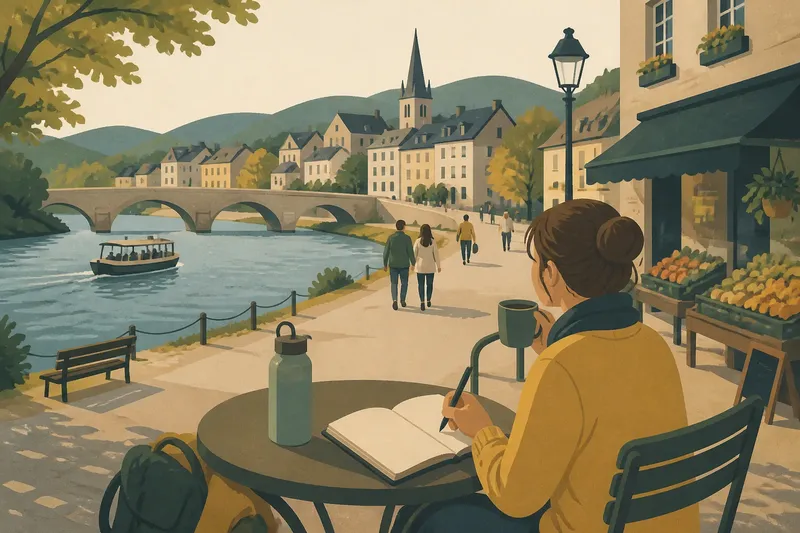
Open time does not have to mean standing at a junction with no idea what to do. Keep a few possibilities in mind, but treat them as choices rather than obligations. Near a waterfront, that might mean a short walk, a café or simply watching the boats. In a city centre, it could be a second-hand bookshop, a public garden or a slow wander through a market.
Choose options that are easy to drop. An activity that requires another booking or a long detour can turn a casual impulse into a new timetable. A nearby park, a small independent shop or a seat with a view offers a natural pause without requiring much preparation.
Keep your options close to the anchor when possible. That gives you room to change direction without making the day hinge on a complicated journey. If the next appealing place is farther away, ask whether it is still worth going if you arrive later than expected. If not, leave it for another outing.
One small practical habit helps: save the anchor’s address and route on your phone, then put it away when you have arrived. You can look around without repeatedly checking what comes next.
Let the pace respond to the day
At the anchor, give yourself permission to stay longer or leave sooner than you first imagined. A display may hold your attention; a crowded room may make you ready for a quieter place. Neither response is a failure to follow the plan. The point of choosing one centre is to have a reason for going, not a rule about how long you must remain.
Notice ordinary signals as the day unfolds. Are you hungry, tired, curious, cold or ready for company? A proper pause can be more satisfying than squeezing in a nearby attraction. If you are with someone else, ask what they feel like doing next rather than assuming the original plan still suits both of you.
There is no need to turn a change of mood into a grand decision. You might decide to take the shorter walk, choose a café instead of another museum, or head home while the day still feels pleasant. An outing can be complete without using every available hour.
What should you do if the main activity is closed?
Keep the outing’s general aim rather than trying to replace every detail. If the gallery is unexpectedly unavailable, you might still enjoy the neighbourhood, a nearby public garden or a relaxed meal. Choose a substitute that feels good in its own right, not one selected merely to preserve a crowded schedule.
How many activities belong in a day out?
There is no ideal number for everyone. Start with the activity you care about most, then add only a firm arrangement that supports it, such as a booked meal or a necessary connection. Let other stops remain optional so your energy and interest can guide the day.
What if the people coming with me want different things?
Agree on the shared anchor, then allow some choice around it. You might visit the exhibition together and let each person browse a nearby shop or café at their own pace before meeting again. If the main activity itself is a poor fit for someone, talk it through before making plans.
Is it sensible to leave a day out unplanned?
Leave the flexible parts open, not the details that matter for access or timing. Check the anchor’s arrangements and your route, then let the rest stay adaptable. This gives you enough preparation to start without demanding that every later decision be made in advance.
Finish by choosing one next move
Before you set off, decide only what needs deciding: the anchor, how to reach it and any booking that cannot be left to chance. You can keep a couple of nearby ideas in reserve, but there is no need to rank them or give each a time slot.
When someone asks what the plan is, try: “We’re going to the market, then we’ll see how we feel.” That is a plan, not a lack of one. A day out with one clear centre and room around it can offer the pleasures you hoped for while leaving space for something you could not have scheduled. For a more rewarding day out, give the anchor your attention and let the rest earn its place.