Borrow, Buy or Make Do: Choosing Materials for a New Interest
Choosing materials for a new interest is easier when you weigh reversibility against likely continued use, so you can begin without overcommitting.
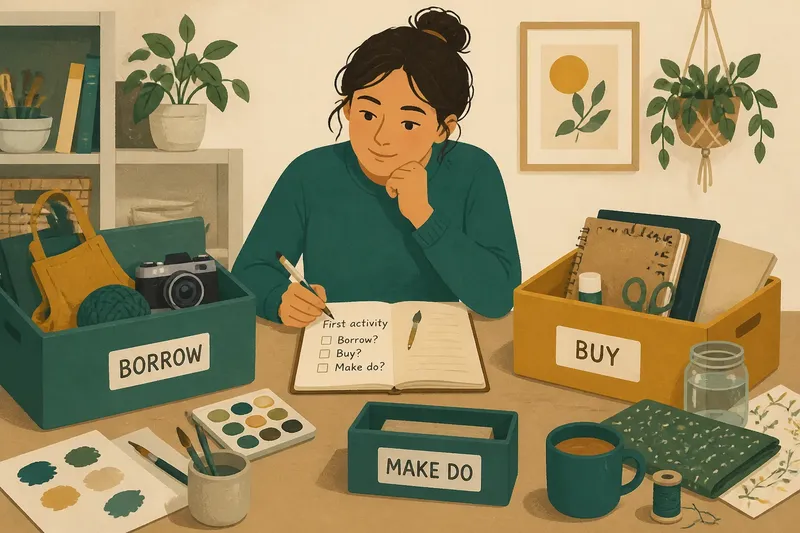
Should you borrow, buy or make do when a new interest catches your attention? Choosing materials for a new interest is less about finding the perfect kit than deciding how easily you can change course, and whether you are likely to use the materials again.
A borrowed set keeps the decision reversible. A modest purchase gives you reliable access to the basics. Making do uses what is already in a drawer, cupboard or shed. Each can be a sensible start; the right one depends on what you want to try and what the first sessions will actually involve.
How should I choose materials for a new interest?
Start with the first activity you want to do, not with a shopping list. Then ask two questions: can I return, lend or repurpose what I get, and would I still want it if this interest becomes part of my regular leisure time?
Reversibility matters most when your curiosity is fresh. If you are unsure whether you will enjoy watercolour painting, a borrowed palette or a few colours from an existing set may be enough to learn how mixing and paper feel. If you already draw often and want to add colour, a small, carefully chosen set may serve beyond the first try.
Likely continued use is not a prediction you need to get right. It is a reason to favour materials with another use. A notebook can hold sketches, recipes or travel notes; a basic hand-sewing kit can mend clothes as well as support a craft project.
Write down the one thing you want to make or practise first. Let that define the materials.
When is borrowing the better choice?
Borrow when the tool or material is specialised, costly to store, or useful mainly for finding out whether you enjoy the activity. A library, community workshop, local hobby group or a friend may have supplies available. For a one-off pottery taster, for instance, borrowing an apron and using the studio’s clay avoids acquiring equipment that may sit untouched.
Borrowing is especially helpful when feel and handling matter. A friend’s knitting needles let you notice whether their size and material suit your hands before you choose your own. A shared camera or gardening tool can reveal what features you actually reach for.
Be considerate about the arrangement. Ask what condition the item should be returned in, whether consumables are included, and when the owner needs it back. Keep borrowed pieces together and clean them as agreed.
If an item is awkward to transport or needed repeatedly, borrowing may become more trouble than it saves. In that case, consider a small purchase or an accessible shared space.
What should I buy for a first attempt?
Buy only the materials that make the first activity possible and that you can imagine using in another way. A beginner trying collage might choose a glue stick, a pair of scissors and a few sheets of card, then use old magazines for images. Someone curious about breadmaking might start with a mixing bowl and a sturdy spoon already in the kitchen, buying only an ingredient they lack.
Look for usable basics rather than a large assortment. A starter set can be convenient, but check whether its contents match the project you have in mind. A box full of extras is not a saving if you have nowhere to keep them or no plan to use them.
Before buying, check what you already own and what the activity calls for. Where the right choice depends on a product label, maker’s instructions or local rules, follow those rather than improvising.
- Name the first project or practice session.
- List the materials it actually needs.
- Check cupboards, drawers and shared supplies for suitable items.
- Separate essentials from tempting extras.
- Choose items that have another plausible use if your interest changes.
- Decide where the materials will live between sessions.
Keep the first purchase easy to store and easy to pass on if your plans change.
Can I make do with things I already have?
Often, yes, especially for activities where substitutes do not spoil the experience. Scrap paper can be useful for testing drawing pencils; a clean jar can hold water for a small painting session; fabric offcuts can be enough to practise simple stitches. Using what is at hand lets you spend your attention on the activity rather than on selecting equipment.
But improvising has limits. A substitute that frustrates the basic action can make it hard to tell whether you dislike the hobby or simply lack a suitable tool. If your paper buckles with wet paint, for example, your impression of painting may be shaped by the paper rather than the process.
Say you want to try hand lettering and have a pencil, plain paper and a felt-tip pen at home. You could use those to practise spacing and letter shapes, then notice whether you want to continue. If you do, a brush pen and smoother paper may make sense; if not, the existing supplies remain useful for notes and sketches.
Make do where the material is a low-stakes stand-in, not where it blocks the part you want to explore.
How can I tell if a starter purchase is worth keeping?
Ask whether you have a next use in mind, not whether you feel obliged to justify the purchase. After a few sessions, notice which items you reach for, which ones create friction and what you wish were different. That information can guide a second, specific addition—or show that borrowing is still the better fit.
Storage is part of the decision. A small tin of sewing supplies or a folder of drawing paper is easier to live with than an assortment spread across the dining table. If materials can be packed away neatly, returning to the interest may feel simpler without turning your home into a permanent project space.
When something no longer suits you, pass it to a friend, donate it where appropriate, or keep only the parts with another clear use. The aim is not to defend every choice; it is to let your materials follow your curiosity.
What if I only want to try the hobby once?
Choose borrowing, a taster session or an at-home substitute before buying a full set. A single afternoon can be a worthwhile way to spend time even if it does not become a continuing interest.
Should I buy a complete beginner kit?
Only if its contents match the activity you want to try and you have a place to store them. Compare the kit with a short list of essentials, and set aside add-ons that do not serve your first project.
What if borrowing feels inconvenient?
Compare the effort of arranging collection and return with the value of keeping the item available. If access is difficult and you expect to use a basic tool again, a modest purchase may be the more comfortable choice.
How do I avoid buying materials I will not use?
Decide on one first project, check what is already at home, and postpone extras until you can name a reason for each one. Choosing materials for a new interest works best when the first commitment leaves room to change your mind.
A good beginning need not look like a fully equipped hobby corner. It can be a borrowed tool, a few suitable supplies or a familiar object pressed into service. Choose the option that makes it easiest to start, while leaving the next choice open.