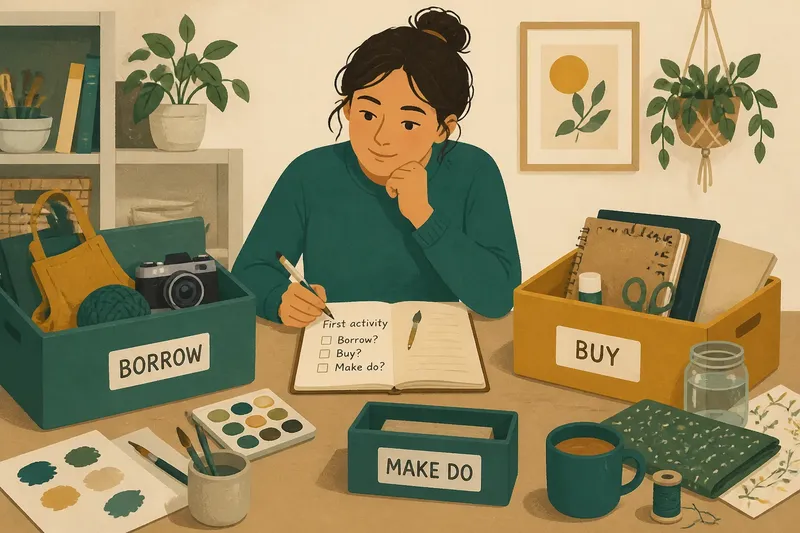
The Leisure Club Before the Clubhouse
Learn how to start an informal hobby group with a clear invitation, a welcoming first meeting and a flexible rhythm that makes it easy to return.
How do you start an informal hobby group without turning a passing interest into another obligation? An informal hobby group can begin with a kitchen table, a shared curiosity and a date that suits the people you invite. Keep the first gathering simple: choose one activity, explain what to expect and leave room for everyone to shape what comes next.
Give the shared interest a clear shape
A group is more than several people doing the same activity in one place. A few practical agreements help everyone understand what they are joining: who is welcome, what to bring, how long the gathering will last and whether beginners are expected to have any experience.
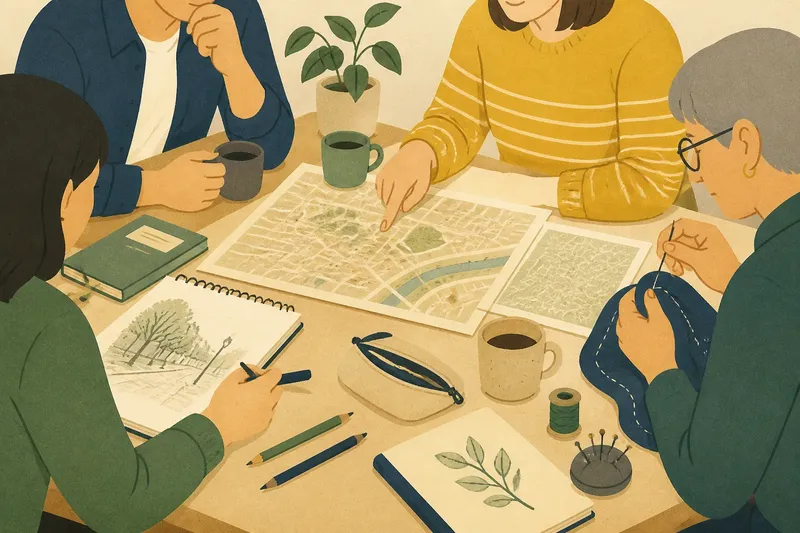
Choose an activity that offers different ways to take part. A sketching circle could look at unfinished drawings, while a mending group might share a sewing question or work quietly alongside one another. The point is to give the gathering a focus without making skill or polished results the price of entry.
Say you want to bring together neighbours who enjoy local maps. Invite them to draw a favourite nearby corner, bring a printed street map and make sharing optional. One person can sketch, another can point out a place they remember, and someone else can simply look; the likely result is a conversation with several easy ways to join in, rather than a test of drawing ability.
Start with a few concrete choices
You do not need to settle the group’s future before sending an invitation. Make a few decisions that let people picture the first meeting, then adjust them in response to what they say.
- Check the activity is specific. If “arts and crafts” feels too broad, choose a clear starting point such as mending a loose button or sketching a local view; if people can picture what they will do, send that as the invitation, otherwise narrow the idea further.
- Check who the invitation welcomes. If the activity is open to beginners, say so plainly; if some prior knowledge is needed, describe what people should already know and invite those who would enjoy that level.
- Check what materials are needed. If ordinary items such as paper and pencils are enough, list them; if specialist tools are required, name them and offer a simpler alternative if possible.
- Check the venue suits the activity. If there is room to sit, talk and use the materials safely, keep the venue; if not, choose a quieter or more suitable place, such as a library room or a café table that can accommodate the group.
- Check the time works for invitees. If several people can attend, confirm the proposed time; if it rules people out, offer another time or agree to try a different one for the first gathering.
- Check the expected level of participation is clear. If people know they can watch, ask questions or join in, keep the invitation as written; if they might assume they must produce something, clarify that sharing is optional.
- Check whether the gathering has a natural ending. If a short session fits the activity and people’s schedules, set that expectation; if the activity needs more room, agree on a relaxed stopping point rather than leaving the duration vague.
These checks are prompts, not a timetable. Make the decisions in whatever order suits your group, and send the invitation once people can understand the activity and its expectations.
Make the first meeting easy to join
In your invitation, include the activity, location, time, anything people should bring and whether beginners are welcome. Add a simple way to reply. A personal message or a small group chat gives people a chance to ask about access, materials or the plan without having to raise it in front of everyone.
At the gathering, welcome people as they arrive and explain the activity in a sentence or two. If everyone already knows one another, a brief check-in may be enough; if someone is new, introduce them to one person with a shared interest rather than putting them in the centre of the room.
People can take part by trying the activity, asking a question or observing for a while. That choice is more welcoming than expecting every person to speak or show a finished result.
Give each gathering a loose rhythm
A familiar outline makes it easier for people to settle. Leave time to arrive and get comfortable, focus on the shared activity for a while, then leave room for conversation or a decision about meeting again. The exact order can change with the group and the activity.
If the conversation pauses, offer a prompt connected to what people are doing: “Which detail caught your eye?” or “What would you try next?” You can also let people work quietly. A pause does not need to be filled straight away.
Share the small tasks if people are happy to help. One person might choose the venue, another bring a prompt and another send a reminder. If nobody wants to take on a task, keep the arrangement simple enough for the host to manage without it becoming a standing job.
What helps an informal hobby group work?
Does everyone need experience with the hobby?
No. Make the invitation clear about whether beginners are welcome and offer more than one way to participate. If the activity does require prior knowledge, explain that plainly so people can decide whether it suits them.
How often should the group meet?
Choose a rhythm that fits the people who want to attend, then ask whether it still works after a few gatherings. An occasional meet-up may suit the group better than a regular commitment that feels hard to keep.
What should I do if conversation goes quiet?
Offer a specific question about the activity, or let people carry on quietly. If someone seems unsure how to join, explain the next small action rather than asking them to speak to the whole group.
How can I welcome someone who is new?
Explain the usual plan, mention any materials they might want and introduce them to one person. Let them choose whether to join in straight away or take some time to observe.
Adjust the format when people’s needs change
Schedules and interests shift, so a group may need a different venue, a shorter session or a new activity. Ask a practical question before adding more structure: is the meeting time awkward, is the invitation unclear, or would a different place make it easier to attend?
Imagine the group has met at a busy café, but members say they struggle to hear one another. Keep the same map-drawing activity and ask whether a library meeting room is available; if it is, hold the next session there and see whether conversation feels easier. If a quiet room is unavailable, try a less busy time at the café or choose an activity that works with less discussion.
To start an informal hobby group, offer one inviting activity, make the first meeting straightforward and ask what people would like to change. A brief message after the gathering can settle the next date, confirm what materials are useful and give everyone a simple way to say what they enjoyed or would rather do differently.